Sobha Projects

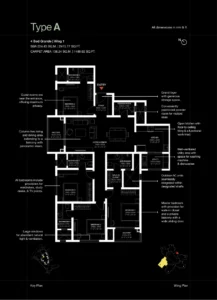
sobha one world model apartment

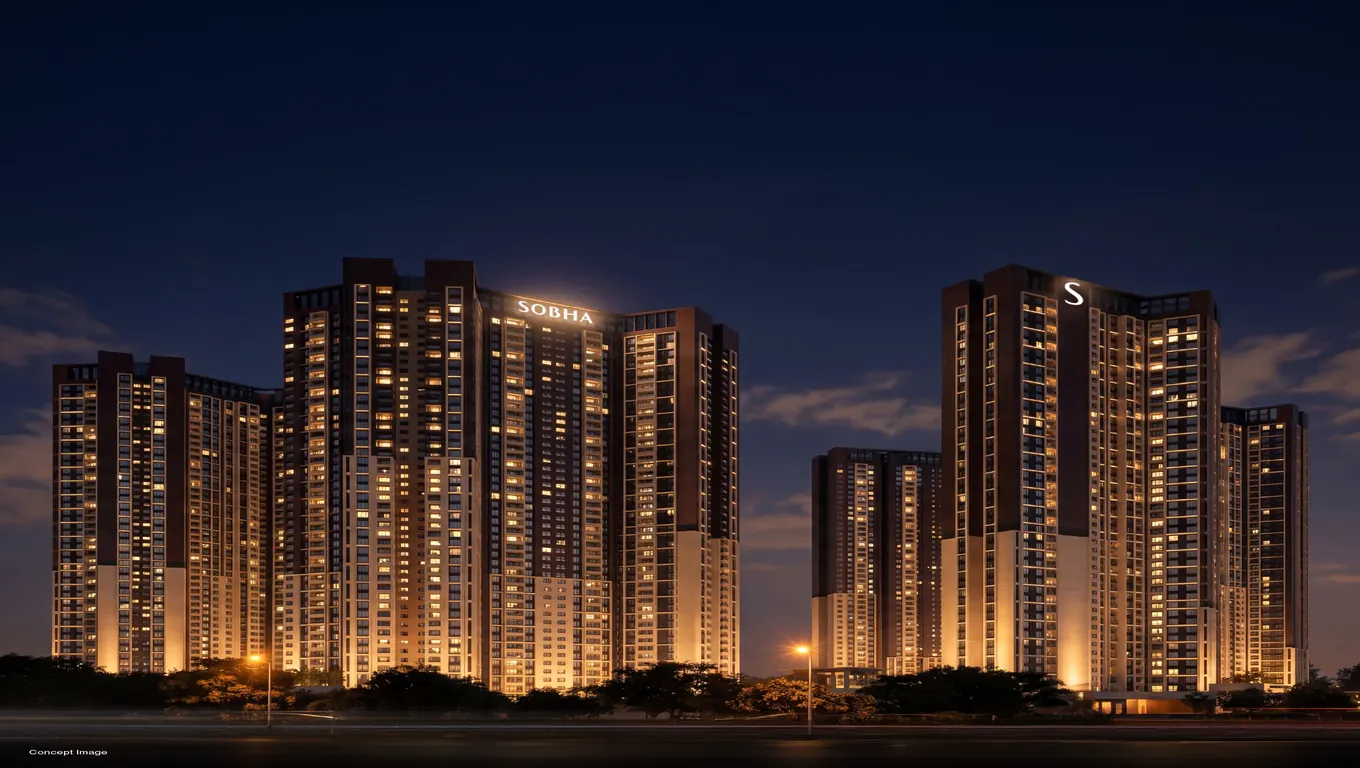
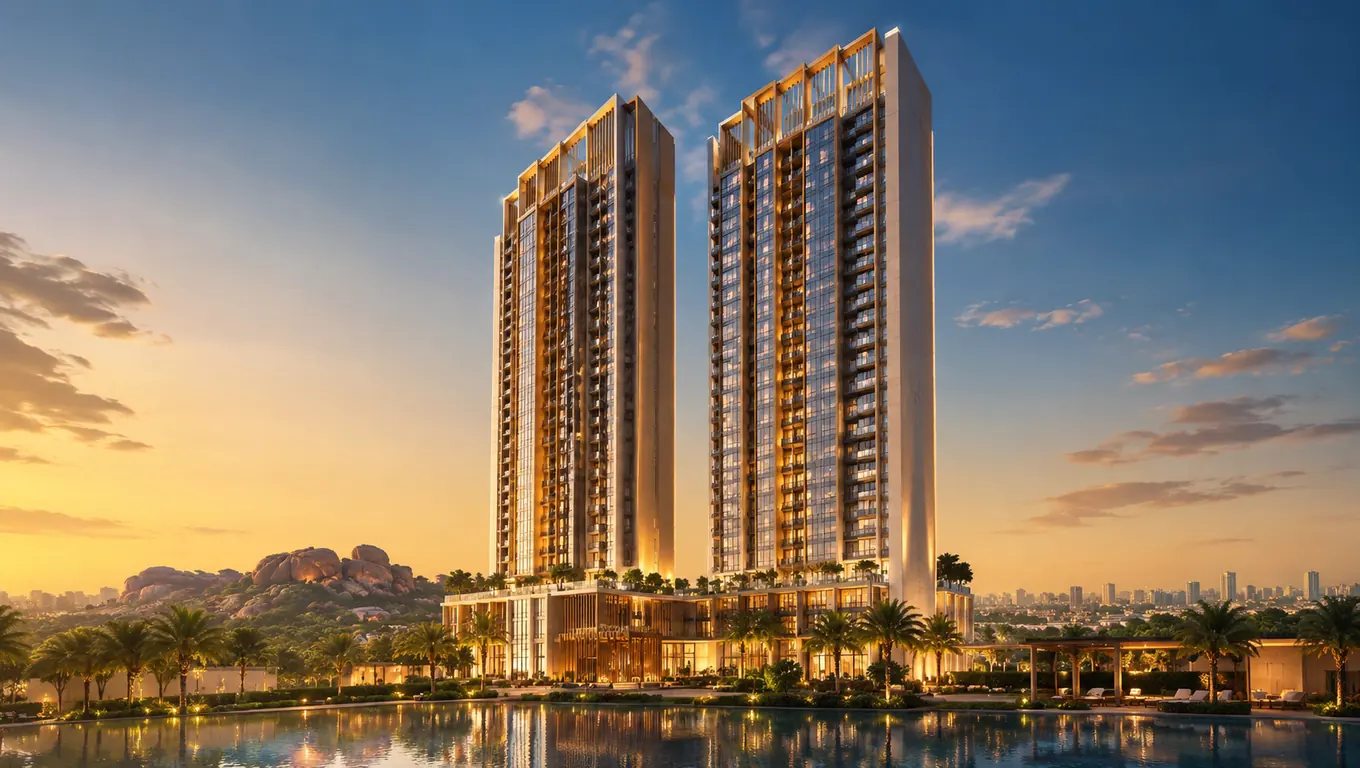
Sobha One World night elevation — Sobha residential towers illuminated at Hoskote, East Bangalore

What Living at Sobha One World Actually Feels Like

Contents

Price sheets and floor plans can give you the basics of what you’re buying, but they don’t really capture the essence of a Tuesday morning or a Saturday afternoon once you’re settled in. That’s the kind of experience that’s tough to fit into a spec table, so let’s dive into the reality that often gets left out of the brochures.

Morning

Most mornings at Sobha One World kick off much like they do in any big township, but here, “downstairs” means heading to One Club, an impressive 1.2 lakh sq. ft. clubhouse instead of just a small gym. You might find someone swimming laps in the temperature-controlled pool before heading off to work, while another resident is in the co-working lounge, laptop open and coffee in hand, skipping the commute for a morning filled with calls. Kids are off to VIBGYOR High School, just a quick 2 km away, close enough that the school run doesn’t take a big chunk out of the morning.

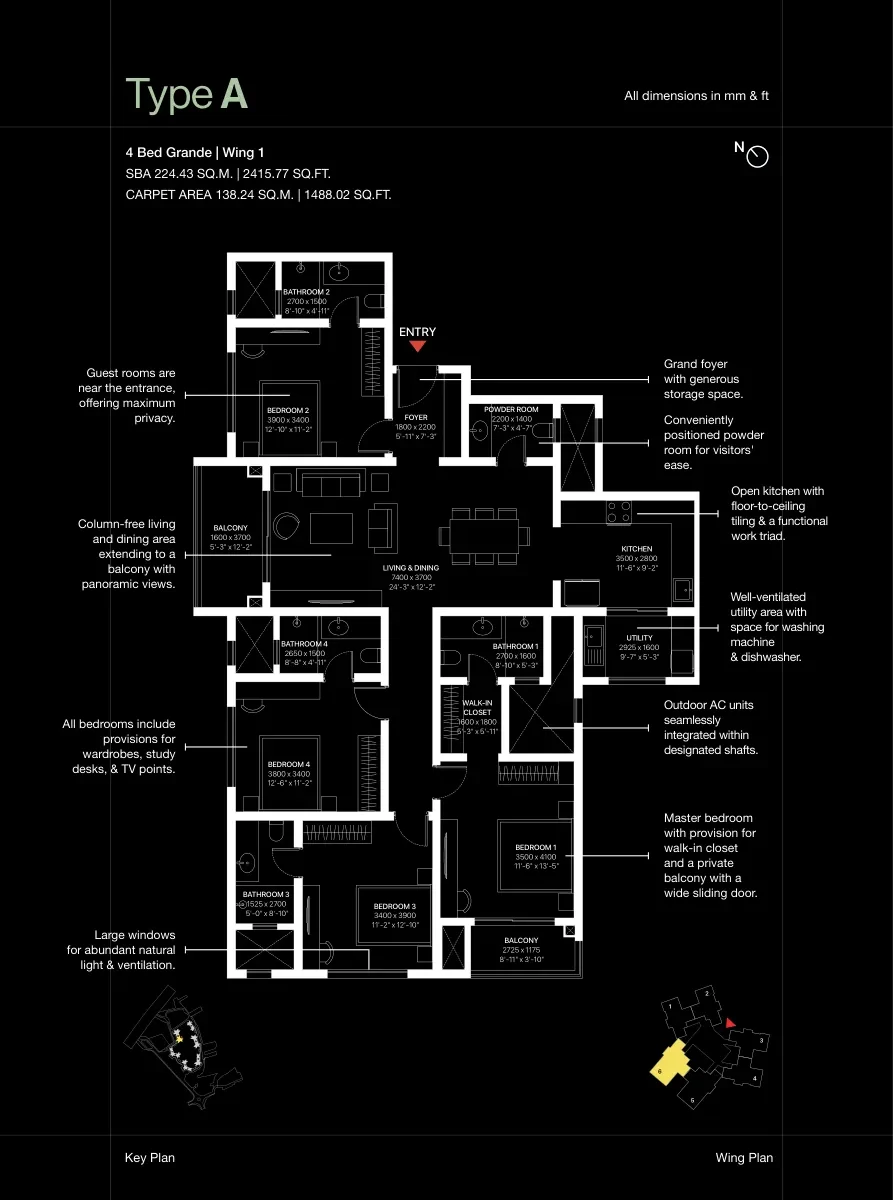
What you might overlook in a floor plan is how the column-free living and dining layout transforms this daily routine. With no pillars interrupting the space, there’s no need to awkwardly arrange furniture around support beams just one seamless area that’s perfect for breakfast, a video call, and everything in between.

Midday

By midday, the township is buzzing with its own energy. One Emporium, the retail boulevard integrated into the property, means that a quick coffee run or picking up a forgotten grocery item doesn’t require leaving the gates. It might seem like a small perk until you’ve lived somewhere without it, and then it becomes a game changer. For those who work from home occasionally, the co-working lounge inside One Club provides a refreshing change of scenery without the hassle of a commute just a five-minute stroll instead of a drive across town. 

Evening

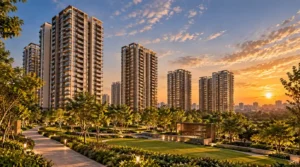
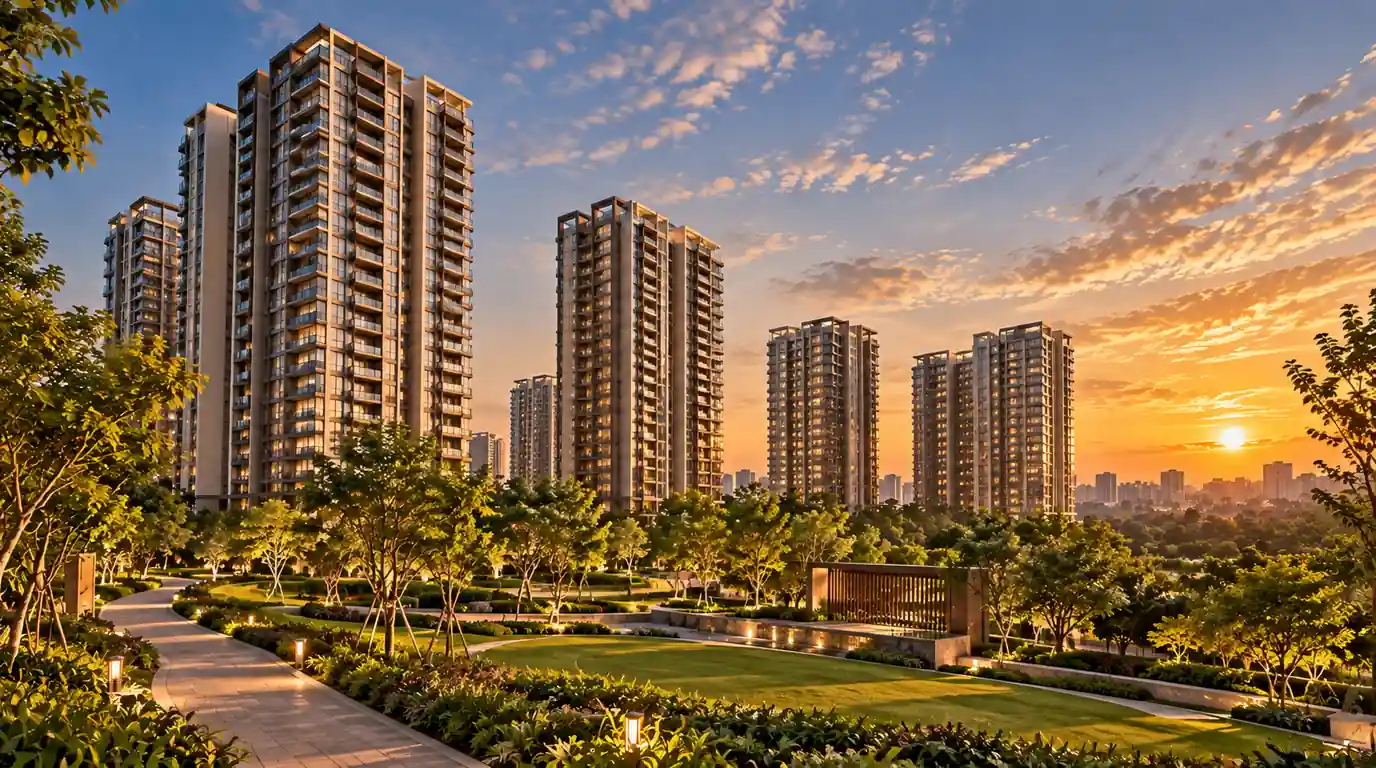
This is where the six landscape zones really come into play. Depending on your mood, an evening stroll could lead you to the Mediterranean Serenity zone, with its charming Tuscan gardens and rustic stone planters, or perhaps to Tropical Zen, where you can unwind by the soothing Tranquillity Falls and enjoy a reflexology walk. Kids are drawn to the skating rink or the pet park, while those looking to get their heart rate up can choose between a 750m jogging track or a 350m path that winds around the World Stadium’s sunken sports hub.

It’s important to note that none of this is just a flat lawn, and that’s intentional — with 80% of Phase 1 dedicated to open green space across these six zones, an evening here offers a fresh experience every day.

Weekend

Weekends are when the true scale of this place shines through. Picture a Saturday cricket match on the expansive 90m-diameter ground or a lively pickleball game on one of the three courts. On a quiet Sunday morning, you might find peace in the Zen courtyard instead of heading out somewhere else. For families, the amphitheater and multipurpose hall mean that community events can happen right here, eliminating the need to book an outside venue. Birthdays, festivals, and social gatherings can all take place within the township itself.

What This Actually Looks Like Right Now

Let’s be clear about the current situation: Sobha One World is still a work in progress, with possession set to roll out between 2032 and 2033. No one is living this exact day just yet. However, the model apartments and experience center are open for visits now; walking through them gives you a sneak peek into the daily life that awaits once construction is complete.

Frequently Asked Questions

Can I visit the Sobha One World model apartment?

Yes  the model apartments and experience center at the Sobha One World site in Hoskote are open now. Call 080-688-74644 or submit an inquiry to schedule a visit.

What can I see at the Sobha One World Experience Center?

The experience center and model apartments show the actual interior layouts, finishes, and space planning across the available configurations a closer look than floor plans alone can give. If the lifestyle side of this is what’s drawing you in as much as the price and floor plans, the best next step isn’t more reading; it’s booking a visit to see the model apartments in person.

Leave a Comment

Stay Connected with Us

More Related Blogs & Posts

Ready-to-Move vs Under-Construction

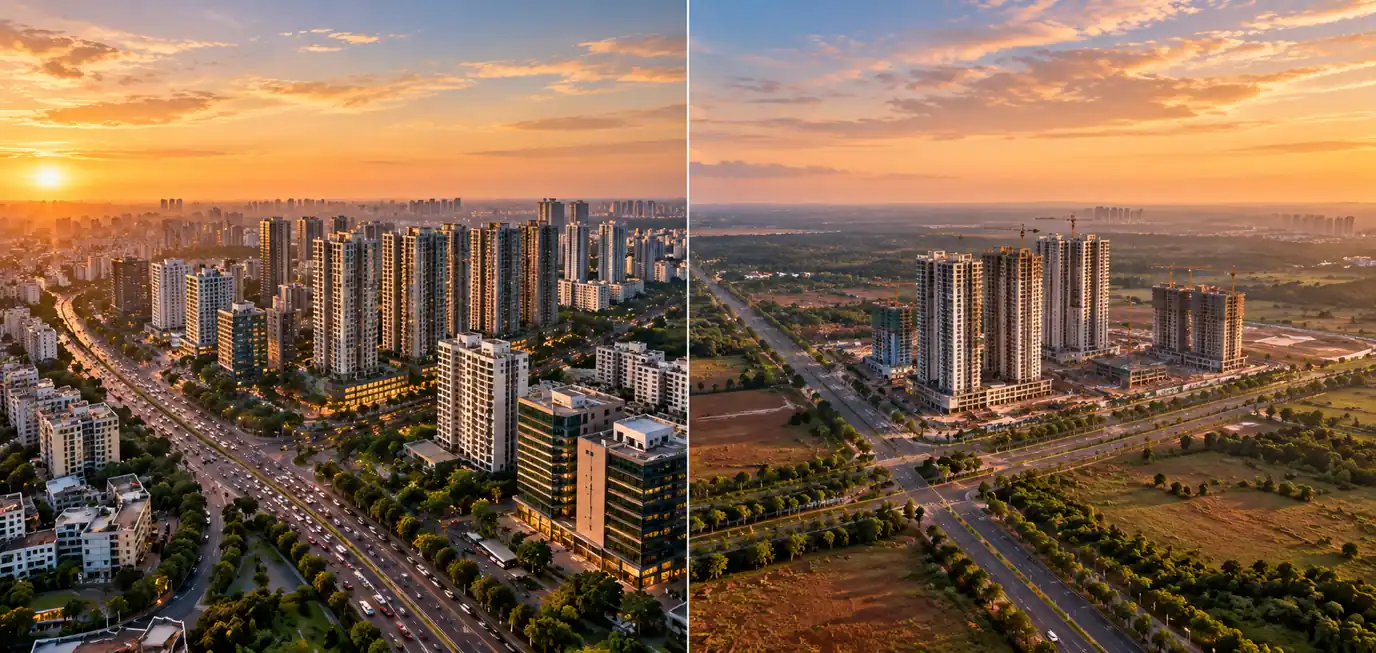
Conceptual comparison of a ready-to-move apartment tower and an under-construction tower in Bangalore

Under Construction vs Ready to Move: Sobha One World's 2032 Possession Explained

Contents

Picture two identical-looking listings for East Bangalore. One says “ready to move.” The other says “possession 2032.” Same builder, similar specs, and a price gap between them that’s hard to ignore. Which one actually makes financial sense?

If you’re looking at Sobha One World Hoskote, this isn’t a hypothetical — it’s the exact decision in front of you. Possession here runs from 2032 to 2033, phase by phase, which is genuinely longer than the 2-to-4-year wait most under-construction projects in the city ask of buyers. So let’s actually work through whether the numbers back up that wait, instead of just taking a brochure’s word for it.

The Trade-off Nobody Explains Clearly Enough

Under-construction homes across Indian cities typically run 10 to 30% cheaper than a finished, ready-to-move unit in the same neighbourhood though how much cheaper depends heavily on the city and how far along construction is. Bengaluru’s emerging corridors are no exception; buyers pay a real premium for the ability to walk in and start living somewhere immediately.

Taxes complicate the comparison further. An under-construction flat carries 5% GST (1% if it qualifies as affordable housing under ₹45 lakh). A ready-to-move flat with its occupancy certificate in hand? Zero GST. On a ₹2 Cr purchase, that’s a ₹10 lakh swing before you’ve even compared the base prices.

Here’s a detail worth sitting with: Roughly 71% of Bengaluru buyers still choose under-construction over ready-to-move, according to recent industry surveys not because they enjoy waiting, but because the price and choice of unit usually make it worth it. Banks, for their part, tend to move faster on ready-to-move approvals, since there’s no construction-stage complexity to underwrite.

Why “2032” Isn’t Quite Like Other Under-Construction Projects

Most advice on this topic assumes a fairly modest 2-to-4-year build. Sobha One World isn’t that kind of project. It’s 14 towers spread across 48 acres, registered under 6 separate RERA phases, with the earliest handover in July 2032 and the last in September 2033. Call it a 6-to-7-year runway from booking to keys.

That changes the question you should be asking yourself. A 2-to-3-year wait is mostly a test of patience. A 6-to-7-year one is a genuine financial planning exercise you need to be comfortable holding your money and your housing plans over that entire stretch, not just until the next milestone payment clears.

What actually helps here is the payment structure. You’re not carrying a full loan from day one 10% at booking, another 10% at Agreement of Sale, and the remaining 80% released in stages as construction actually progresses. Your EMI grows with the building, not ahead of it. That’s a meaningfully lighter burden than paying full EMI on a finished property you can’t yet live in.

Does the Price Actually Justify Six Years?

This is where general city-wide averages stop being useful, and the specific numbers start mattering. Sobha One World’s all-in rate works out to roughly ₹14,745 to ₹16,095 per sq. ft. Compare that with Sobha’s own projects already completed or nearing completion in core Whitefield, a short drive away; those are currently going for ₹18,000 to ₹22,000 per sq. ft.

Same developer. Similar build quality. A 20-to-30% gap that isn’t hypothetical it’s the same brand’s own pricing a few kilometers apart. On a 3 BHK, that’s roughly ₹50 to ₹75 lakh saved. Even after stacking six-plus years of pre-EMI carrying cost on top, that’s a head start most ready-to-move alternatives in this price bracket simply can’t offer.

What RERA Actually Does for You Here

The old fear of under-construction property pay now, hope the builder delivers eventually, does have a real regulatory answer today, and it’s worth understanding rather than trusting on faith. Sobha One World’s RERA registration means 70% of everything you pay sits in a dedicated escrow account that can only legally fund this specific project’s construction. The developer is required to file progress disclosures, and a delayed handover triggers defined compensation under the Karnataka RERA Act.

You don’t have to take any of that on trust, either. Every registered phase, its quarterly filings, and the developer’s compliance history are public. Pull up the Karnataka RERA portal yourself and check the registration directly, rather than relying on what a sales brochure tells you. None of this erases risk entirely but it’s a fundamentally different landscape from the pre-RERA horror stories this fear is usually based on.

So Who Should Actually Wait?

If you don’t need a home in the next year or two, and you’re genuinely comfortable planning your finances six-plus years out, locking in today’s pricing ahead of what STRR and expressway connectivity will likely do to values here is a reasonable bet.

If you need to move soon, or construction-linked uncertainty even RERA-backed  isn’t something you can sit with for that long, this probably isn’t your project. And that’s a fine answer too. Not every good investment fits every timeline.

Frequently Asked Questions

When exactly will Sobha One World be ready for possession?

Possession is staggered across 6 RERA-registered phases, starting with the earliest wings in July 2032 and finishing with the last batch in September 2033.

Is a 6-to-7-year wait normal for a project this size?

It’s longer than a typical single-tower launch, but not unusual for a project of this scale — 14 towers and 3,484 units across 48 acres is a much bigger build than most timelines people compare it against.

How much GST will I pay on an under-construction unit here?

5%, since the price point is above the ₹45 lakh affordable-housing threshold. Ready-to-move properties with an Occupancy Certificate carry no GST at all.

Does RERA registration actually protect my money during construction?

Yes, in a concrete way — 70% of your payments go into an escrow account that can only be used to build this project, and delays carry defined compensation obligations. You can verify the registration yourself on the Karnataka RERA portal rather than taking anyone’s word for it. For the full cost sheet, payment schedule, and current pricing, see the Sobha One World project page. Still weighing whether Hoskote as a location makes sense in the first place?

The Sobha Hoskote investment analysis is the place to start.

Leave a Comment

Stay Connected with Us

More Related Blogs & Posts

Carpet Area vs Saleable Area

sobha-inizio-parel-mumbai

Carpet Area vs Saleable Area: What Mumbai Homebuyers Actually Pay For

Contents

If you’ve been flat-hunting in Mumbai for more than a week, you’ve probably noticed the same thing that trips up most first-time buyers: the size on the brochure and the size you actually get to walk around in are two very different numbers. A “1,000 sq.ft.” apartment can, quite legally, have a livable carpet area of 700 sq.ft. or less. That’s not a scam it’s just how Mumbai real estate has always measured and marketed space. The problem is that almost nobody explains it clearly before you’re standing in a sales office with a cost sheet in front of you.

This guide breaks down exactly what carpet area, built-up area, and saleable area mean, why RERA changed how developers are allowed to advertise them, and how to actually compare two flats fairly instead of comparing two marketing numbers.

Why This Confusion Exists in the First Place

Before 2016, Indian developers could advertise a flat’s size using almost any measurement that made it look bigger built-up area, super built-up area, or a “loading” percentage that quietly added common corridors, lift lobbies, and even the width of your own walls into the number you were quoted. Two flats with identical usable space could be advertised at very different sizes depending on which developer’s marketing team wrote the brochure.

The Real Estate (Regulation and Development) Act, 2016 (RERA), was written partly to fix exactly this. It legally defines carpet area and requires every RERA-registered project to state it, which is why you’ll now see “RERA Carpet Area” as a specific line item on any legitimate cost sheet in Maharashtra.

The Three Numbers You’ll See on Any Cost Sheet

The carpet area is the actual usable floor space inside your apartment’s walls, literally the area you could cover with a carpet. It excludes the thickness of your own walls, balconies (usually), and anything outside your front door. This is the number RERA legally defines and requires developers to disclose, and it’s the only one that tells you what you’re actually paying to live in.

Built-up area (sometimes called “ancillary area” on modern cost sheets) adds the thickness of your walls and, depending on the project, balcony space. It’s larger than carpet area but still specific to your unit; it’s not shared with anyone else in the building.

Saleable area (also called super built-up area) is the number that includes your built-up area plus a proportional share of common spaces, lobbies, stairwells, the clubhouse, and sometimes even the swimming pool. This is usually the biggest number on the sheet, and historically, it’s the one most heavily used in marketing because a bigger number sounds better in a headline.

Here’s a simple way to keep the three straight:

Term

What it includes

What it’s used for

Carpet area

Usable floor space inside your walls

The legally mandated, RERA-defined figure

Built-up/ancillary area

Carpet area + your own wall thickness + balcony

A more complete picture of your private space

Saleable area

Built-up area + a share of common areas

What many price-per-sq.ft. comparisons are based on

Why the Gap Between These Numbers Matters More Than You Think

The difference between carpet area and saleable area is sometimes called the “loading,” and it isn’t fixed. It varies by developer, by building design, and even by which floor or wing a specific unit sits in, because units with more shared amenities nearby (like a clubhouse-facing wing) sometimes carry a slightly higher loading than a plainer wing in the same tower.

This matters for one very practical reason: if you’re comparing price per square foot across two projects, you need to know which area each number is based on. A flat quoted at “₹25,000 per sq.ft.” on saleable area could work out to a meaningfully higher effective rate per sq.ft. of carpet area than a flat quoted at “₹28,000 per sq.ft.” on carpet area directly. The sticker price tells you very little until you know the denominator.

A quick worked example: a 3 BHK might be advertised as 1,225 sq. ft. (saleable), but the RERA carpet area the space you actually live in could be closer to 1,130 sq. ft. That’s roughly an 8% gap, which is fairly typical for a well-designed high-rise, but it’s worth confirming for every project you’re comparing, because the gap isn’t standard across the industry.

What to Actually Ask For Before You Book

  • The RERA carpet area figure specifically, not just “the area” ask the sales team to point to the exact line on the RERA-approved plan.
  • The saleable-to-carpet ratio for the specific unit you’re considering, not just a project-wide average, corner units, higher floors, and amenity-adjacent units can carry different loading.
  • Whether the price quoted is per sq.ft. of carpet area or saleable area, this single question resolves most cross-project price confusion instantly.
  • The project’s MahaRERA registration number, so you can independently verify the carpet area figure against the official filing on the MahaRERA portal rather than relying solely on the brochure.

A Real Cost Sheet, As a Worked Example

It’s easier to see this in practice than in the abstract. SOBHA Inizio in Parel, Mumbai, lays out carpet area and saleable area separately for each configuration for instance, its 3 Bed Residence Luxe is listed at 944.76 sq.ft. RERA carpet area against 1,021.29 sq. ft. saleable area, a gap of roughly 8%. Looking at a real, RERA-disclosed cost sheet like this is a genuinely useful exercise before you go comparing brochures across builders, because it shows you exactly which line to check first, regardless of which project you eventually choose.

FAQ

Is carpet area or saleable area the “real” size of my flat?

Carpet area is the number that reflects your actual usable, walkable floor space. The saleable area includes a share of the building’s common areas and will always be a larger number for the same unit.

Why do builders quote saleable area instead of just carpet area?

Historically, saleable area produces a bigger, more marketable number, and price-per-sq.ft. comparisons across the industry have often been based on it. RERA doesn’t ban quoting the saleable area; it just requires the carpet area to be disclosed as well, so buyers have both figures to compare.

Does RERA require carpet area to be disclosed?

Yes. RERA legally defines carpet area and requires it to be stated for any RERA-registered project, which is why “RERA Carpet Area” appears as a specific line item on compliant cost sheets.

What’s a “normal” gap between carpet area and saleable area?

It varies by project and building design; there’s no fixed industry standard, but a gap in the 15–25% range between saleable area and carpet area is common in mid- to high-rise developments with substantial shared amenities. Always check the actual figures for the specific project rather than assuming a percentage.

Can I verify a project’s carpet area myself?

Yes every RERA-registered project’s approved plans, including carpet area figures, are available on the state’s RERA portal (in Maharashtra, that’s MahaRERA) under the project’s registration number.

Hoskote: East Bangalore's Emerging Growth Story

Unlike Whitefield, Hoskote is still in the early stages of its residential transformation.

Traditionally known for its industrial and logistics significance, the region is now emerging as one of East Bangalore’s most closely watched real estate markets.

Several factors are contributing to this growth:

  • Satellite Town Ring Road (STRR)
  • Bangalore-Chennai Expressway
  • NH-75 connectivity
  • Industrial corridor expansion
  • Township developments
  • Growing social infrastructure

The rise of premium projects such as Sobha Hoskote demonstrates the increasing confidence developers have in the area’s future.

For buyers willing to take a long-term view, Hoskote offers an opportunity to enter a market before it reaches full maturity.

Leave a Comment

Stay Connected with Us

More Related Blogs & Posts

Home Loan Guide for Sobha One World Hoskote: Rates, EMI & Eligibility (2026)

Sobha One World night elevation — Sobha residential towers illuminated at Hoskote, East Bangalore

Home Loan Guide for Sobha One World Hoskote: Rates, EMI & Eligibility (2026)

Contents

If you’re planning to buy at Sobha One World Hoskote, the loan you choose will affect your monthly outflow more than almost any other decision in the process — a 0.5% difference in interest rate on a ₹1.5 Cr loan adds up to several lakhs over 20 years. Here’s where rates actually stand right now, and what to expect for the specific configurations at this project.

Current Home Loan Rates in India — August 2026

The RBI’s repo rate has come down significantly over the past year — it now stands at 5.25%, after a series of cuts through 2025. Since most floating-rate home loans today are repo-linked, that reduction has passed through to borrowers fairly quickly. As of this month, starting rates from major lenders look like this:

Lender

Starting rate (p.a.)

SBI

7.25%

Bank of Baroda / PNB

~7.45%

ICICI Bank

7.55% – 7.75%

HDFC Bank

7.75%

Axis Bank

8.15%

Kotak Mahindra Bank

~7.99%

These are the starting rates advertised for the strongest borrower profiles — most buyers will land somewhere in a range above this depending on credit score, income type, and loan amount. Rates change with RBI policy, so treat this table as a snapshot, not a guarantee — always confirm the current rate directly with the lender before applying.

What Actually Decides Your Rate

Your CIBIL score is the single biggest factor. Lenders generally reserve their best advertised rates for borrowers with a score of 750 or above. Below that, expect the rate to move up — sometimes by a full percentage point or more — or, below roughly 650, expect some lenders to decline the application outright. If your score isn’t in the 750+ range yet, it’s worth spending a few months clearing existing debt and lowering credit utilization before applying, rather than accepting a materially higher rate.

Other factors lenders weigh: whether you’re salaried or self-employed (self-employed applicants often face more documentation scrutiny at PSU banks), your existing EMI obligations relative to income, and the loan-to-property-value ratio you’re requesting.

EMI Examples for Sobha One World Configurations

Using a representative current rate of 7.5% p.a., 20-year tenure, and 80% financing (the standard construction-linked structure for this project), here’s what the numbers look like across a few configurations:

Configuration

Price

Loan Amount (80%)

Approx. Monthly EMI

1 Bed Luxe

₹1.10 Cr

₹88.0 L

~₹70,900

2 Bed Luxe

₹1.59 Cr

₹1.27 Cr

~₹1,02,500

3 Bed Luxe

₹2.26 Cr

₹1.81 Cr

~₹1,45,600

4 Bed Grande

₹3.73 Cr

₹2.98 Cr

~₹2,40,400

Two things worth knowing about how this actually plays out at Sobha One World specifically:

You won’t pay the full EMI from day one. Since this is a construction-linked payment plan, your loan is disbursed in stages as construction progresses — not as one lump sum. In practice this means your EMI starts small (on whatever portion has been disbursed so far) and grows gradually over the ~6-year construction period, rather than hitting you at the full amount immediately. This is one of the more overlooked advantages of buying under construction versus ready-to-move: your housing cost ramps up alongside your ability to plan for it.

A 0.25% rate difference matters more than it looks. On the 3 Bed Luxe example above, moving from 7.25% to 7.75% changes the EMI by roughly ₹5,600 a month — over ₹13 lakh across the full tenure. It’s worth getting quotes from at least two or three lenders rather than going with whichever bank your builder’s sales team suggests first.

Documents You’ll Typically Need

  • PAN card and Aadhaar
  • Last 3 months’ salary slips (salaried) or last 2–3 years’ ITR and profit/loss statement (self-employed)
  • Bank statements for the last 6 months
  • Form 16 or ITR acknowledgment
  • Property documents — booking confirmation, RERA registration copy, cost sheet from the developer

Getting the Best Rate

  • Check pre-approval before you finalize your unit. Knowing your eligible loan amount and likely rate before you commit to a configuration prevents unpleasant surprises at the agreement stage.
  • Ask about the women’s co-applicant concession. Several lenders, including SBI, offer a small rate concession (commonly around 0.05%) when a woman is a co-applicant on the loan — a modest but easy saving to claim if applicable.
  • Compare EBLR-linked vs fixed options carefully. With rates on a downward trend through 2025–26, a floating repo-linked rate has generally worked in borrowers’ favour recently — but that can reverse, so weigh your own risk tolerance rather than assuming the current trend continues indefinitely.

For the full cost sheet, exact configuration-wise pricing, and the built-in EMI calculator for Sobha One World, see the pricing and payment plan section on the main project page. If you’re still weighing whether Hoskote is the right location before getting into loan specifics, the Sobha Hoskote investment analysis covers that separately.

This article is for general informational purposes and does not constitute financial advice. Rates, eligibility criteria, and offers change frequently and vary by lender and borrower profile — confirm current terms directly with your bank or a qualified financial advisor before making a decision. Figures accurate as of August 2026.

Hoskote: East Bangalore's Emerging Growth Story

Unlike Whitefield, Hoskote is still in the early stages of its residential transformation.

Traditionally known for its industrial and logistics significance, the region is now emerging as one of East Bangalore’s most closely watched real estate markets.

Several factors are contributing to this growth:

  • Satellite Town Ring Road (STRR)
  • Bangalore-Chennai Expressway
  • NH-75 connectivity
  • Industrial corridor expansion
  • Township developments
  • Growing social infrastructure

The rise of premium projects such as Sobha Hoskote demonstrates the increasing confidence developers have in the area’s future.

For buyers willing to take a long-term view, Hoskote offers an opportunity to enter a market before it reaches full maturity.

Leave a Comment

Stay Connected with Us

More Related Blogs & Posts

STRR Hoskote–Hosur Stretch 2026: What the Final Stretch Means for Buyers

Hoskote vs Whitefield property comparison for homebuyers and real estate investors in East Bangalore 2026

STRR Hoskote–Hosur Stretch 2026: What the Final Stretch Means for Buyers

Contents

If you’ve been tracking Sobha Hoskote or any other property near the Satellite Town Ring Road, there’s a real update worth knowing about — not another “coming soon” promise, but an actual near-term completion date, confirmed in Parliament.

What’s Actually Done vs. What’s Still Coming

The Satellite Town Ring Road (STRR) is a 288 km ring road being built around Bengaluru by the National Highways Authority of India, connecting Dobbaspet, Doddaballapur, Devanahalli, Hoskote and the Tamil Nadu border at Hosur. It’s been under construction in phases since 2023, and like most large infrastructure projects, its timeline has moved more than once.

Here’s where it genuinely stands as of August 2026:

  • The 80 km Dobbaspet–Hoskote stretch is done and has been for a while. This section — passing through Doddaballapur and Devanahalli — has been open and tolled since 2023–2024. This isn’t a promise; it’s a road people are driving on today.
  • The remaining 21 km Hoskote–Hosur stretch, right past the Tamil Nadu border, is now the focus. This section has slipped before — it was originally expected months earlier — but it’s now close. Reports put it at over 90% complete on the Tamil Nadu side, with the Karnataka side needing final surfacing, deck slab work, and safety testing before it opens to traffic.
  • Union Minister Nitin Gadkari confirmed the status directly in a written reply to the Rajya Sabha, stating that 4 of the STRR’s 6 packages are complete, with the remaining two expected to become operational in September and November 2026.
  • Put together, nearly half of the entire 288 km ring road is expected to be operational by November 2026, connecting Dobbaspet all the way to Hosur.

Why This Matters Specifically for Hoskote

Hoskote sits almost exactly at the junction where the completed Dobbaspet–Hoskote stretch meets the newer Hoskote–Hosur section — which is why Sobha One World, on Old Madras Road just off NH-75, is roughly 5 minutes from this corridor rather than a long drive to reach it.

Once the Hosur stretch opens, the practical effect for residents is a signal-free route toward Devanahalli, the airport, and the Tamil Nadu border — without needing to route through central Bengaluru traffic. Ring roads elsewhere in Bangalore have historically driven measurable appreciation in the years immediately after opening, precisely because they turn a location from “on the outskirts” into “on the ring” — a meaningfully different commute story for anyone working across the city rather than just locally.

The Second Piece: Bangalore–Chennai Expressway

Hoskote isn’t just on the STRR — it’s the starting point of the Bangalore–Chennai Expressway, a 258 km, 10-lane highway connecting NH-75 in Hoskote directly to Sriperumbudur near Chennai. The Hoskote–Bethamangala stretch has been operational since December 2024, and while full end-to-end completion has moved from an earlier August 2025 target to around July 2026, the section that actually matters for Hoskote residents — the start of the expressway itself — is already live.

Having two major road projects both anchored at the same junction is unusual for an emerging corridor, and it’s a big part of why Hoskote is drawing attention from institutional developers rather than just local builders.

A Word of Caution, Because Honesty Matters Here

It would be easy to write this as “the road is basically open, buy now” — but that’s not quite accurate, and buyers deserve the real picture. The Hoskote–Hosur stretch has already missed one earlier target, and large infrastructure projects in India routinely see further short delays even in their final stretch. September and November 2026 are the currently stated targets from the minister overseeing the project, not a guarantee.

The honest way to read this: the 80 km core stretch through Hoskote is real, finished, and already changing commute patterns today. The remaining Hosur extension is genuinely close — most of the heavy construction work is done — but “close” and “open” aren’t the same thing until vehicles are actually using it. If you’re evaluating a property partly on the strength of this road, weight what’s already built more heavily than what’s still targeted.

What This Means If You’re Looking at Hoskote

For homes like Sobha One World Hoskote, the STRR isn’t a distant promise baked into a sales pitch — the section that actually serves this location has been operational for two years, and the remaining extension is now in its final construction phase with a minister-confirmed date rather than a developer’s marketing timeline. Combined with the Bangalore–Chennai Expressway starting at the same junction, Hoskote is one of the few East Bangalore corridors where the “upcoming infrastructure” story is mostly already built, not still on paper.

If you want the fuller picture on why this location makes sense as an investment — not just the road story, but the pricing gap versus Whitefield, the honest trade-offs, and who this corridor actually suits — the Sobha Hoskote investment analysis goes into that in detail.

Sources: TOI/Swarajya Mag reporting on STRR completion targets, Deccan Herald reporting on the Hoskote-Hosur stretch and toll history, and Nitin Gadkari’s written reply to the Rajya Sabha on STRR package status (August 2026). Infrastructure timelines are subject to change — always verify current status before making a purchase decision based on projected completion dates.

Hoskote: East Bangalore's Emerging Growth Story

Unlike Whitefield, Hoskote is still in the early stages of its residential transformation.

Traditionally known for its industrial and logistics significance, the region is now emerging as one of East Bangalore’s most closely watched real estate markets.

Several factors are contributing to this growth:

  • Satellite Town Ring Road (STRR)
  • Bangalore-Chennai Expressway
  • NH-75 connectivity
  • Industrial corridor expansion
  • Township developments
  • Growing social infrastructure

The rise of premium projects such as Sobha Hoskote demonstrates the increasing confidence developers have in the area’s future.

For buyers willing to take a long-term view, Hoskote offers an opportunity to enter a market before it reaches full maturity.

Leave a Comment

Stay Connected with Us

More Related Blogs & Posts

NRI investment in Gurugram real estate

An NRI's Practical Guide to Investing in Gurugram Real Estate in 2026

Contents

Introduction

Ask any NRI who’s bought property in India in the last five years, and Gurugram probably comes up in the first two minutes of the conversation. It’s not hard to see why. You’ve got a city with global corporate offices, an international airport an hour’s drive away, and a handful of established developers sitting on land parcels big enough to plan proper communities instead of another lone tower squeezed between two others.

But “Gurugram is a good bet” isn’t really a plan. The real decision comes down to which corridor, which developer, which configuration suits you, and honestly, whether you’ve sorted out the paperwork before you send money home rather than scrambling to fix it afterward. This piece walks through all of that using three real, RERA-registered projects from the same developer: Sobha Strada, Sobha Aranya, and Sobha Crescent. Each one is built for a different kind of buyer, and figuring out which one that’s you is really the whole exercise.

Why Gurugram Keeps Coming Up for NRI Buyers

Gurugram’s appeal for overseas Indians isn’t just nostalgia for “home.” There’s a structural reason behind it. The city has a dense cluster of MNC offices, IT and consulting firms, and finance headquarters spread across Cyber City, Golf Course Road, and Udyog Vihar. That keeps a steady flow of professionals relocating in and out, which is exactly the kind of demand you want if you’re buying a property you don’t plan to live in yourself.

The other half of the story is that things have gotten more transparent since RERA came in. Haryana’s regulator, HARERA, now publishes sanctioned plans, promoter details, and construction status for every registered project, and you can look this up yourself without needing someone on the ground in India to do it for you. Corridors like Dwarka Expressway and Golf Course Extension Road have also seen real price growth over the past couple of years. That said, a good chunk of the infrastructure driving that growth story, things like metro extensions and the RRTS, is still being built rather than finished. Past appreciation is useful context. It isn’t a promise.

One thing that tends to work in an NRI’s favour is timing. Most resident buyers are juggling EMIs against a fixed local income, while a lot of NRIs are buying with a longer horizon and a stronger currency behind them. That changes how you should think about holding period, rental yield versus appreciation, and which type of unit actually fits your plans.

Sort the Paperwork Before You Fall in Love With a Floor Plan

It’s tempting to jump straight into comparing floor plans and price sheets, but getting the legal and financial side sorted first is what actually determines whether this goes smoothly or turns into a headache two years down the line.

You don’t need RBI permission to buy, with two exceptions. Under FEMA, NRIs and PIOs can buy residential and commercial property in India without any special approval from the Reserve Bank. The exceptions are agricultural land, plantations, and farmhouses, which NRIs generally can’t buy directly. None of that applies here. Strada and Crescent are apartment and serviced-residence formats, and Aranya is a residential apartment product too.

Payment needs to go through the right channel. Funds have to move through an NRE, NRO, or FCNR account, or as a normal inward remittance, not handed over as foreign cash. This also matters for financing. Several Indian banks and housing finance companies do lend to NRIs against Indian property, usually with repayment tied to an NRE or NRO account.

You can bring the money back out, but there’s a cap. If you sell down the line, repatriation is currently capped at around USD 1 million per financial year from an NRO account, and you’ll need tax clearance plus proper documentation (Form 15CA/15CB, signed off by a CA). If you originally paid in foreign exchange, repatriating that original amount is usually a bit more straightforward to establish than on a purchase funded entirely in rupees. Worth a conversation with your CA before you buy, not after you’ve already sold.

TDS hits NRI sellers harder than resident sellers. This one catches people off guard. A resident seller pays roughly 1% TDS. An NRI seller currently pays around 20% on long-term gains (property held over two years) or 30% on short-term gains, plus surcharge and cess, and it’s deducted on the full sale value, not just the profit. If your actual tax liability works out lower, you can apply for a reduced or nil-deduction certificate instead of waiting over a year for a refund. Recent budget changes have made some of the compliance easier on the buyer’s end, but the underlying rate gap between residents and NRIs hasn’t gone away. Plan your exit math with that in mind from day one.

A Power of Attorney makes remote buying workable. If you can’t be in India for booking, registration, or possession, a registered PoA lets a trusted relative or professional handle it for you. Get it notarised at the Indian consulate where you live and registered in India. An unregistered or badly attested PoA is one of the more common causes of delay people run into.

Verify RERA registration yourself. Every project in this guide is HARERA-registered, and the numbers are on their respective pages, but don’t just take a website’s word for it, including ours. The HARERA portal is free to search and takes about two minutes.

None of this is legal or tax advice. FEMA rules, TDS rates, and repatriation limits shift with each budget, so check current specifics with a chartered accountant who handles NRI taxation before you commit any money.

Three Sobha Addresses, Three Different Bets

With that groundwork out of the way, here’s where the actual comparison starts. All three projects come from Sobha Limited, so you’re getting the same backward-integrated construction model, the same 1,456-point quality check before handover, and the same multi-decade delivery record behind each one. But they’re not interchangeable, and each is really aimed at a different kind of buyer.

Sobha Strada: Built for Rental Income You Can Manage From Abroad

Sobha Strada sits in Sector 106, inside the SOBHA Downtown precinct on Dwarka Expressway, and it’s structurally different from the other two on this list. It’s a serviced-residence format, not a regular apartment building. All 251 homes are compact 1 BHKs, roughly 857 to 1,026 sq. ft., managed hotel-style with reception, housekeeping, and laundry built into the offering rather than left to a resident-run association. Prices start around ₹2.03 Cr.

For an NRI, this solves a fairly specific problem: how do you manage tenants, maintenance, and turnover from another country without a family member physically checking in on things? A managed format takes most of that off your plate. It’s also aimed at a demand pocket that market data (MagicBricks, 2025) has flagged as under-supplied along this corridor: compact 1 BHKs for corporate stays and short-to-medium-term rentals. The catch is that possession isn’t until December 2032, and a few amenities in the brochure are still marked “proposed” rather than confirmed, so get that in writing before you book.

Sobha Aranya: Built for a Long-Horizon Family Home

Sobha Aranya at Karma Lakelands, Sector 80, sits at the other end of the spectrum. These are spacious 3 and 4 BHK homes, 2,836 to 4,285 sq. ft., inside a golf estate that’s actually operating, not just landscaped for the brochure photos. There’s a real nine-and-a-half-hole course, mature trees, a lake, and wildlife that was there long before Sobha started building. Entry pricing works out to around ₹25,000 per sq. ft., which puts the smallest unit at roughly ₹7.09 Cr.

This isn’t really a rental-yield play. It’s more a bet on land scarcity, and on Sector 80 developing the way Golf Course Extension Road and Dwarka Expressway did over the past decade. It suits NRIs thinking further out: a home for eventual return, somewhere for parents to live in the meantime, or a property meant for the next generation. The low-density layout, two to three homes per floor with no facing windows, matters more here than immediate rental income. Sector 80 is still a developing area, not an established one like DLF Phase 5, so patience is really part of the deal.

Sobha Crescent: Built as a Corridor-Growth Bet

Sobha Crescent in Sector 63A is Sobha’s first project on Golf Course Extension Road, a stretch that’s already seen launches from several other big developers. That’s actually a point in its favour: Crescent is entering a corridor where demand is already proven, rather than one that’s still unproven. Every unit here is a corner residence with three-wall ventilation and no shared walls, four homes per floor. Configurations run 3 and 4 BHK, 2,277 to 2,966 sq. ft., with pricing between roughly ₹5.47 Cr and ₹7.59 Cr.

For an NRI, Crescent lands in a middle ground. GCER already has schools, hospitals, and corporate parks nearby, so the appreciation case rests less on “will this area develop” and more on “how much does an established corridor re-rate once a trusted name like Sobha proves itself here.” It’s also pitched at a wider buyer base than the other two, end-users, NRIs, and investors chasing rental demand, which can matter later if you’re thinking about resale.

Comparing the Three at a Glance

Sobha Strada Sobha Aranya Sobha Crescent
Location Sector 106, Dwarka Expressway Sector 80, Karma Lakelands Sector 63A, Golf Course Ext. Road
Format Serviced 1 BHK residences 3 & 4 BHK golf residences 3 & 4 BHK corner apartments
Entry Price ~₹2.03 Cr ~₹7.09 Cr ~₹5.47 Cr
Possession December 2032 Expected 2030 2031–March 2033
Best suited to Rental income, corporate stays Legacy/family home, long horizon Corridor appreciation, broad resale demand
RERA Verify at haryanarera.gov.in Verify at haryanarera.gov.in Verify at haryanarera.gov.in

A Due-Diligence Checklist Worth Actually Using

A few of these checks take an afternoon and can save you real money later.

  1. Pull the RERA filing yourself on HARERA: sanctioned plans, promoter litigation history, and timeline, rather than trusting a brochure or a portal listing.
  2. Ask what’s proposed versus confirmed. Get the final amenity list in writing before you book, not after.
  3. Understand the gap between carpet and saleable area. A serviced format like Strada carries lower carpet efficiency than a regular apartment like Aranya or Crescent, so compare price per sq. ft. with that in mind rather than as a flat number.
  4. Line up your CA before you book, not after. TDS, repatriation paperwork, and any DTAA benefits are much easier to sort out early than to untangle at resale.
  5. Decide on a PoA versus travelling yourself, and start early. Getting one registered properly isn’t a same-week job.
  6. Judge the developer on what it’s already delivered, not what’s in the render. Sobha’s track record on nearby completed projects like International City and Sobha City tells you more than any pre-launch brochure will.

The Honest Caveats

None of these three are risk-free, and it’s worth saying that plainly rather than letting a broker tell you later. All three are fairly new launches with possession years away, which comes with the usual under-construction risks: timelines slip, markets shift, and construction-linked payments keep coming regardless of what your home currency is doing. The infrastructure stories around both Dwarka Expressway and Sector 80/GCER are real, but not finished. Several of the metro and expressway links mentioned in the marketing material are still under construction. And the appreciation numbers from the last couple of years, however strong, are history. They’re not a guarantee of what comes next.

Where to Go From Here

All of this really comes down to what you’re trying to get out of the purchase: rental income you can manage from abroad, a family home for the long run, or exposure to a corridor that’s still finding its ceiling. Have a look at the full details, floor plans, and current pricing on the Sobha Strada, Sobha Aranya, and Sobha Crescent pages, or reach out through the contact page for a current price list and payment plan on whichever one you’re leaning toward.

This article is for general information only and isn’t legal, tax, or investment advice. FEMA regulations, TDS rates, and repatriation limits change over time, so check with a qualified chartered accountant and legal advisor who works with NRI transactions before you make a purchase decision.

Frequently Asked Questions

Yes. A registered Power of Attorney covers booking, registration, and possession, with payment routed through an NRE, NRO, or FCNR account.

Sobha Strada. It's built specifically as a managed, serviced 1 BHK format for the corporate-stay and short-to-medium-term rental market, which data suggests is under-supplied along Dwarka Expressway right now.

Yes. TDS for NRIs runs around 20% on long-term gains or 30% on short-term gains, applied to the full sale value, compared to roughly 1% for resident sellers. A lower or nil-deduction certificate can bring that down if your actual liability is smaller.

Broadly, up to USD 1 million per financial year from an NRO account, once tax clearance and CA-certified paperwork are in place. Confirm the current limit with your bank and CA, since FEMA rules do get revised.

 Indian banks and NBFCs do lend to NRIs against property here, usually with repayment through an NRE or NRO account. Eligibility and tenure vary by lender and by your country of residence.

Sobha Aranya is really built for that: spacious 3-4 BHK homes in a genuine long-term family setting. Sobha Crescent offers something similar too, just closer to established social infrastructure on Golf Course Extension Road.

Leave a Comment

Stay Connected with Us

More Related Blogs & Posts

Is Sobha RERA Approved in Kerala

Is Sobha RERA Approved in Kerala? A Project-by-Project Verification Guide

Contents

Introduction

Buying an apartment or villa before it’s fully built means trusting paperwork you probably haven’t read as carefully as the floor plan. RERA exists specifically to close that gap — and every Sobha project in Kerala is registered under it. This guide lists the registration number for each one, explains what that number actually protects you from, and — more importantly — shows you exactly how to verify it yourself in under a minute, rather than just taking our word for it.

What RERA Actually Protects You From

The Real Estate (Regulation and Development) Act requires developers to register every project with the state’s regulatory authority — in Kerala, that’s K-RERA — before they can advertise, market, or accept bookings. Registration means the developer has disclosed the project’s land title, approved layout plans, promoter details, and a committed possession timeline, all of which become part of a public record.

What this means practically for you as a buyer:

  • Your booking amount is protected — RERA mandates that a fixed percentage of funds collected from buyers goes into a dedicated escrow account for that specific project, rather than being freely used across a developer’s other projects.
  • The possession date is a legal commitment, not a marketing estimate — delays carry defined penalty and compensation provisions.
  • What’s advertised has to match what’s registered — a developer can’t show one set of amenities in a brochure and register something smaller with the regulator.

None of this is unique to Sobha — it’s the law for any project in Kerala above the RERA threshold. But it’s exactly why checking the registration yourself, rather than trusting a sales brochure, is worth the two minutes it takes.

How to Verify Any Sobha Kerala RERA Number Yourself

Don’t take any project’s RERA number at face value from a brochure or a sales page — including this one. Here’s the direct way to check:

  1. Go to the official Kerala RERA portal: rera.kerala.gov.in
  2. Click on “Registered Projects” or use the search/certificate lookup tool
  3. Enter the project’s RERA number (listed for each project below) or search by promoter name (“Sobha Limited”)
  4. Confirm the registered project name, promoter, land area, and proposed completion date match what’s being advertised to you

This takes less time than reading one page of a brochure, and it’s the single most useful thing a buyer can do before paying a booking amount on any project — Sobha or otherwise.

RERA Registration — Every Sobha Project in Kerala

Project City RERA Number Project Page
Sobha Marina One Kochi Multiple phase registrations — see project page for full list View details →
Sobha Atlantis Kochi See project page for current registration number(s) View details →
Sobha Woods Trivandrum See project page for current registration number View details →
Sobha Metropolis Thrissur See project page for current registration number(s) View details →
Sobha Silver Estate Thrissur See project page for current registration number View details →
Sobha Lake Edge Thrissur K-RERA/PRJ/190/2020 View details →
Sobha Bellevue Calicut Kozhikode See project page for current registration number View details →
Sobha Bela Encosta Kozhikode See project page for current registration number View details →

Verify every registration number directly at rera.kerala.gov.in before relying on it.

Why Multi-Phase Projects Show Several RERA Numbers

Large developments like Marina One aren’t registered once — each construction phase gets its own separate RERA registration as it’s launched, since each phase has its own escrow account, timeline, and set of disclosures. Seeing five different RERA numbers on one project isn’t a red flag; it’s actually a sign the developer is registering correctly as they go, rather than trying to stretch one old registration across years of new towers. What would be a red flag is a phase being marketed or sold before its specific registration appears on the K-RERA portal — worth checking for, especially on any newly launched tower.

Frequently Asked Questions

Yes. Every active Sobha project in Kerala carries a K-RERA registration number, independently verifiable at rera.kerala.gov.in.

K-RERA refers to the Kerala Real Estate Regulatory Authority, the state body responsible for enforcing the Real Estate (Regulation and Development) Act, 2016 in Kerala.

Search the project's RERA number, or the promoter name "Sobha Limited," directly on rera.kerala.gov.in. Never rely solely on a number quoted in a brochure or on a sales website — always cross-check it on the official portal yourself.

 It's illegal for a promoter to advertise, market, book, sell, or accept payment for any plot, apartment, or building without first registering it with RERA, in states where the project meets the registration threshold. Buyers should treat an unregistered project as a serious red flag.

 No registration can eliminate all risk, but RERA does create legally binding possession timelines and financial penalties for delays, along with escrow protections for buyer funds — protections that don't exist for unregistered projects.

Projects developed in multiple phases or towers are registered separately for each phase as it launches. This is standard practice for large multi-tower developments and is not itself a cause for concern.

Leave a Comment

Stay Connected with Us

More Related Blogs & Posts

Sobha Projects in Kerala: The Complete Guide 2026

Sobha Projects in Kerala: The Complete Guide 2026

Contents

Introduction

Sobha Limited’s footprint in Kerala now spans four cities and eight projects — waterfront and riverfront towers in Kochi and Kozhikode, a hilltop community in Trivandrum, and in Thrissur, a family-scale township, a private-villa enclave, and a rare lake-facing address. Each one is built around a genuinely different idea of what a home should be: some lead with a view, some with land and privacy, some with sheer scale of amenities. This guide walks through all eight, with real numbers pulled from each project’s own page, so you can compare before deciding where to look closer.

Quick Comparison — All Sobha Projects in Kerala

Project City Configuration Starting Price* Sizes
Sobha Marina One Kochi (Marine Drive) 2, 3 & 4 BHK ₹3.11 Cr 2,018 – 3,061 sq.ft.
Sobha Atlantis Kochi (Vyttila) 3 & 4 BHK ₹2.2 Cr 1,850 – 3,118 sq.ft.
Sobha Woods Trivandrum (Akkulam) 3 & 4 BHK ₹2.53 Cr 1,811 – 2,697 sq.ft.
Sobha Metropolis Thrissur (Kuttanellur) 3 & 4 BHK ₹2.17 Cr 1,762 – 2,814 sq.ft.
Sobha Silver Estate Thrissur (Pottore) Villas (3 & 4 BHK) ₹2.87 Cr 2,710 – 3,927 sq.ft.
Sobha Lake Edge Thrissur (Puzhakkal, SOBHA City) 4 BHK only ₹4.95 Cr 3,313 – 3,325 sq.ft.
Sobha Bellevue Calicut Kozhikode (Feroke) 3 & 4 BHK ₹3.21 Cr 2,243 – 3,331 sq.ft.
Sobha Bela Encosta Kozhikode (Kuttikkattoor) Villas (4 & 5 BHK) ₹3.9 Cr 3,647 – 5,760 sq.ft.

*Prices are indicative starting prices and vary by tower, floor, unit, and configuration. Confirm current pricing on the individual project page or with our sales team before making a decision.

Sobha Projects in Kochi

Kochi is where Sobha’s Kerala portfolio carries the most weight, and the two projects here aren’t really competing with each other so much as sitting at opposite ends of the same city’s luxury spectrum.

Sobha Marina One is the anchor — the only project in this entire lineup built as a joint development (with Puravankara Limited), and the only one with a private water frontage measured in hundreds of metres rather than a single facing side. Twelve towers, 16.7 acres, and a clubhouse pushing 48,000 sq.ft. put it in a different weight class from everything else in Kochi’s Sobha lineup, which is reflected in its ₹3.11 Cr entry point for the newly launched E7 & S10 towers. See full details, floor plans & pricing →

Sobha Atlantis answers a different question: what if you want the same brand and broadly similar waterfront positioning, without Marina One’s scale or price tag? On Silversand Island in Vyttila, Atlantis runs smaller — 1,850 to 3,118 sq.ft. — and starts nearly a crore lower, at roughly ₹2.2 Cr. For buyers comparing the two, the real decision isn’t apartment quality, since both carry the same construction standard; it’s whether Marina One’s amenity scale and address premium are worth the price gap over Atlantis’s more accessible entry point. See full details, floor plans & pricing →

Sobha Projects in Trivandrum

Sobha Woods is the only project in this entire portfolio where the pitch has nothing to do with water. Set on a hillock in Akkulam, the appeal here is elevation and outlook — Akkulam Lake sits below rather than beside the property, which is a genuinely different visual relationship than the waterfront-level views Marina One or Bellevue Calicut offer. It’s also a quiet technical milestone for Sobha in this city: the brand’s first use of shear wall construction in Trivandrum, a structural method it hasn’t previously deployed here. At 1,811 to 2,697 sq.ft. and starting ₹2.53 Cr, it sits mid-pack on price across the whole portfolio — not the cheapest entry point, not the most expensive, but the only one selling a hilltop rather than a shoreline. See full details, floor plans & pricing 

Sobha Projects in Thrissur

No other city in this portfolio makes buyers choose between three genuinely different ways of living the way Thrissur does — and unlike Kochi’s two projects, which mostly differ by scale and price, Thrissur’s three differ by what kind of life they’re actually selling.

Sobha Metropolis is the volume play — 504 homes across six wings on Ollur Road in Kuttanellur, styled with Greek and Roman architectural detailing under a “Contemporary Classical” label. What’s worth noting here isn’t the classical dressing so much as the math: a 33,000 sq.ft. clubhouse shared across 504 units is still a substantial amenity allowance per household, even at Metropolis’s ₹2.17 Cr entry price, the lowest anywhere in the portfolio. See full details, floor plans & pricing →

Sobha Silver Estate removes the shared-building question entirely. Fifty-seven villas on individual plots across 7.03 acres in Pottore means every buyer here has already decided land ownership matters more than amenity scale — the 8,500 sq.ft. clubhouse is smaller than Metropolis’s in absolute terms, but it’s serving a fraction of the households, which usually means less competition for court time or party-hall bookings. Entry price sits at ₹2.87 Cr. See full details, floor plans & pricing →

Sobha Lake Edge answers neither question the way the other two do. It’s an apartment, not a villa, but it’s also deliberately tiny — 72 homes, full stop, with no phase two coming behind it. The trade being offered here is specific: give up Metropolis’s scale and Silver Estate’s private land, and get the one thing neither of them has, a private 6.5-acre lake frontage inside SOBHA City. That scarcity is exactly why it also carries the highest price in Thrissur, starting at ₹4.95 Cr. See full details, floor plans & pricing →

Sobha Projects in Kozhikode

Kozhikode repeats Thrissur’s apartment-versus-villa split, but with a coastal identity that makes the two projects here feel like they’re selling entirely different cities, not just different housing types.

Sobha Bellevue Calicut stakes its entire pitch on a single geographic fact: it sits at the point in Feroke where the Chaliyar River meets the Arabian Sea, which means units here can face either the river or open sea, sometimes both. Two towers, each 39 residential floors atop a 5-level podium (44 floors total), hold 298 homes across 4.3 acres, with 1.91 acres set aside as dedicated open space — a land-to-tower ratio this list doesn’t see anywhere else. Entry price is ₹3.21 Cr for 2,243 to 3,331 sq.ft.

Sobha Bela Encosta trades that waterfront identity for something else entirely — Portuguese-inspired villa architecture in Kuttikkattoor, and the largest individual home sizes anywhere in Sobha’s Kerala portfolio, up to 5,760 sq.ft. at the top end. Where Bellevue Calicut sells a view, Bela Encosta sells square footage and architectural distinctiveness, starting at ₹3.9 Cr. See full details, floor plans & pricing →

How to Choose Between Sobha's Kerala Projects

With seven active projects across four cities, the right choice usually comes down to three questions:

City first. If you need to be in a specific city, that narrows the list immediately — Kochi (Marina One, Atlantis), Trivandrum (Sobha Woods), Thrissur (Metropolis, Silver Estate, Lake Edge), or Kozhikode (Bellevue Calicut, Bela Encosta).

Apartment or villa. Marina One, Atlantis, Sobha Woods, Metropolis, Lake Edge, and Bellevue Calicut are all apartment developments. Silver Estate and Bela Encosta are villa communities, suited to buyers who specifically want independent land ownership and private outdoor space over shared-building amenities.

What the location is actually built around. Marina One and Bellevue Calicut both lead with water — Marine Drive frontage and a river-meets-sea position respectively. Lake Edge leads with a private lake view at a much smaller, capped scale. Sobha Woods leads with altitude and lake views. Metropolis leads with scale and family-oriented value. Silver Estate and Bela Encosta both lead with land and privacy, but in very different architectural registers (contemporary villa vs. Portuguese-inspired).

Every project listed here is RERA-registered — check each project’s dedicated page for its specific registration number, or verify directly at rera.kerala.gov.in before making any decision.

Frequently Asked Questions

Sobha currently has eight active residential projects across four Kerala cities: two in Kochi (Marina One, Atlantis), one in Trivandrum (Sobha Woods), three in Thrissur (Metropolis, Silver Estate, Lake Edge), and two in Kozhikode (Bellevue Calicut, Bela Encosta).

 Sobha Metropolis in Thrissur currently has the lowest starting price in the portfolio, from approximately ₹2.17 Cr.

Sobha Lake Edge in Thrissur currently has the highest starting price in the portfolio at ₹4.95 Cr, followed closely by Sobha Bela Encosta in Kozhikode. Lake Edge is also the only genuinely lake-facing address in the entire portfolio.

Both. Sobha Silver Estate (Thrissur) and Sobha Bela Encosta (Kozhikode) are villa communities, while Marina One, Atlantis, Sobha Woods, Metropolis, Lake Edge, and Bellevue Calicut are apartment developments.

Yes, every project listed here is RERA-registered under Kerala's K-RERA framework. Registration numbers are listed on each individual project page and can be independently verified at rera.kerala.gov.in.

Sobha Marina One is jointly developed with Puravankara Limited. The other projects listed here are developed by Sobha Limited independently — check each project page for specific developer details.

Yes — Sobha Marina One (Marine Drive, Kochi) and Sobha Bellevue Calicut (Feroke, Kozhikode) both offer river/sea-facing residences, and Sobha Lake Edge (Puzhakkal, Thrissur) is the portfolio's only private lake-facing address.

Leave a Comment

Stay Connected with Us

More Related Blogs & Posts

Sobha Crescent vs Birla Arika: Which Should You Buy

Sobha Crescent Gurgaon luxury residential towers at Sector 63A

Sobha Crescent vs Birla Arika: Which Should You Buy?

Contents

Introduction

If you’ve been house-hunting in the ₹5–14 Cr luxury bracket in Gurgaon this year, you’ve probably had both of these names come up. They’re not really competing for the same buyer, though — and that’s the most useful thing to understand before comparing specs side by side.

The short answer

Sobha Crescent is a 3 & 4 BHK, low-density project on Golf Course Extension Road, positioned as an entry point into Sobha’s luxury segment at a relatively more accessible price band.

Birla Arika is a 4-BHK-only, ultra-low-density project in Sector 31 — a scarcer, more centrally-located parcel that commands a meaningfully higher price band and a smaller unit count overall.

If your budget tops out around ₹6–7.5 Cr, Birla Arika likely isn’t in your consideration set at all — it starts close to where Sobha Crescent’s largest configuration ends. If you’re specifically comparing the two, you’re probably deciding between more space per rupee in a still-developing corridor (Sobha Crescent) versus a smaller, scarcer, more expensive footprint in an established central sector (Birla Arika).

Side-by-side comparison


Sobha Crescent

Birla Arika

Location

Sector 63A, Golf Course Extension Road

Sector 31, NH-48

Site area

11.99 acres (Phase 1: 4.96 acres)

13.27 acres

Configurations

3 & 4 BHK

4 BHK only

Units per floor

4

2

Total units (Phase 1)

336

~340 (across phases)

Unit size range

2,277 – 2,966 sq. ft. (saleable)

Roughly 2,319 – 4,900 sq. ft. depending on source and phase*

Towers

2 (Phase 1), G+42 floors

7 total, G+40/41 floors

Estimated starting price

~₹5.47 Cr (3 BHK)

~₹9.5 Cr – ₹13.4 Cr, varies significantly by source*

Possession

Expected 2031–March 2033

Expected December 2031

RERA (Phase 1)

RC/REP/HARERA/GGM/1054/786/2026/26

GGM/914/646/2025/17

Distance to Cyber City

~29 min

~4.8–5 km

Developer construction model

Backward-integrated (in-house manufacturing)

Standard contractor-based

Both projects show meaningfully different price and size figures across different listing sites and channel partners — this is common for new launches before pricing fully stabilizes. Treat any number here (including ours) as indicative, and confirm current figures directly with the respective developer’s sales team before making a decision.

Where Sobha Crescent has the edge

Density and configuration flexibility. Four units per floor with 3 and 4 BHK options gives you more choice at a lower entry point. If you don’t need a full 4 BHK, Birla Arika simply doesn’t offer anything smaller — it’s a 4-BHK-only project.

Construction model. Sobha’s backward-integrated approach — manufacturing its own doors, tiles, and glazing rather than outsourcing to contractors — is a genuinely differentiated model, documented as a Harvard Business School case study. This is specific to Sobha and not something Birla Arika’s marketing claims.

Price accessibility. At an estimated ₹5.47 Cr entry point, Sobha Crescent sits meaningfully below Birla Arika’s starting range across nearly every source we found (₹9.5 Cr+). For buyers who want the Golf Course Extension Road address without stretching into the ₹10+ Cr bracket, this is the more realistic option.

Where Birla Arika has the edge

Location scarcity. Sector 31 sits inside Gurgaon’s original sector grid (1–57), and a 13-acre gated development of this kind is genuinely hard to find in that zone — most large new launches now happen further out on newer corridors like GCER, Dwarka Expressway, or Sohna Road. Being 4.8–5 km from Cyber City in an established, built-out part of the city is a real advantage over a still-developing stretch like Sector 63A.

Density, taken further. Two units per floor (versus Sobha Crescent’s four) is an even lower-density layout — if privacy and exclusivity are the top priority regardless of budget, Birla Arika pushes further in that direction.

Larger typical unit sizes. Several listings put Birla Arika’s units well above 4,000 sq. ft. — considerably larger than Sobha Crescent’s largest configuration (2,966 sq. ft.) — for buyers who specifically want that scale of home.

The honest trade-off

This isn’t really an apples-to-apples comparison once you look past the surface-level “both are luxury Gurgaon launches in 2026” framing. Sobha Crescent is the more accessible, more flexible option with a distinctive construction story. Birla Arika is a scarcer, larger-format, higher-price-point play on one of Gurgaon’s few remaining large central land parcels. The right choice depends less on comparing spec sheets and more on which trade-off — corridor maturity vs. budget, or unit scale vs. accessibility — matters more to you.

Interested in the full details on Sobha Crescent, Sector 63A? See the complete project overview, floor plans, and pricing

Frequently Asked Questions

Yes, based on currently available estimates. Sobha Crescent starts at approximately ₹5.47 Cr for a 3 BHK, while Birla Arika's 4-BHK-only units start considerably higher, with most sources citing a range from roughly ₹9.5 Cr upward. Confirm current pricing directly with each developer, as both figures vary by source.

 Birla Arika, with 2 units per floor across its towers. Sobha Crescent offers 4 units per floor — still meaningfully lower than most GCER competitors, but not as exclusive as Birla Arika's ratio.

No. Birla Arika is a 4-BHK-only project. Sobha Crescent offers both 3 and 4 BHK configurations, giving buyers more flexibility at different budget points.

 Sector 31 (Birla Arika) is closer, at roughly 4.8–5 km from Cyber City, since it sits within Gurgaon's original, more established sector grid. Sector 63A (Sobha Crescent) is on a newer, still-developing corridor, with Cyber City around 29 minutes by road.

Both are in a similar window — Birla Arika is targeting December 2031, while Sobha Crescent's possession is expected between 2031 and March 2033. Neither date should be treated as final; confirm directly with sales before making time-sensitive decisions.

Leave a Comment

Stay Connected with Us

More Related Blogs & Posts

Best Investment Corridors Near Mysuru in 2026

Best Investment Corridors Near Mysuru in 2026

Contents

Introduction

Mysuru has quietly stopped being “the calmer city next to Bengaluru” and started becoming a destination in its own right. Ask anyone who’s been tracking Karnataka real estate over the last few years, and they’ll tell you the same thing: the city’s growth story isn’t happening evenly. It’s concentrated in a handful of corridors — specific stretches of road and land where infrastructure, industry, and connectivity are converging at the same time.

If you’re thinking about buying property near Mysuru in 2026, knowing which corridor you’re buying into matters more than knowing the city’s overall growth numbers. Here’s an honest breakdown of where that growth is actually happening, and what’s driving each one.

Why "Which Corridor" Matters More Than "Which City"

Real estate in any growing city rarely appreciates uniformly. Growth follows infrastructure — a new expressway, an industrial cluster, a tech park, a ring road extension — and land closest to these catalysts tends to move first and move furthest.

Mysuru’s story right now is shaped by three forces working together: the Bengaluru–Mysuru Expressway cutting travel time dramatically, an expanding industrial base on the city’s outskirts, and a steady trickle of professionals choosing a hybrid lifestyle between Bengaluru and Mysuru. Each corridor below benefits from a different combination of these three forces.

1. Shrirangapattna–Belagola Corridor

This stretch, sitting just off the Bengaluru–Mysuru Expressway and along KRS Road, has become one of the more closely watched pockets in the region. It’s historically known for its temples and its position along the Cauvery, but the real estate conversation here has shifted in the last couple of years.

What’s driving it: proximity to Mysuru’s Hebbal Industrial Area, direct expressway access, and enough open land to support large, well-planned layouts rather than piecemeal development. This is also the corridor where SOBHA Boulevard is located — a RERA-approved, MUDA-sanctioned plotted development spread across 9 acres in Belagola village. Projects like this are a reasonable indicator of where established developers see genuine long-term demand, since large, listed developers generally don’t commit land banks to corridors without doing their own due diligence on growth potential first.

For buyers, this corridor suits two kinds of people well: those who want a plot they can build on within a few years, and those comfortable holding land as it appreciates alongside the industrial and residential growth happening around it.

2. Hebbal Industrial Area and Surrounds

Hebbal in Mysuru isn’t to be confused with the Hebbal in Bengaluru — this is an established industrial belt on Mysuru’s own outskirts, and it’s been a quiet employment anchor for the region for years.

What makes this corridor relevant for residential investment isn’t the industrial area itself, but the ripple effect around it — housing demand from the workforce employed there, ancillary businesses, and the general infrastructure upgrades that follow industrial clusters (better roads, more consistent power, expanding civic services).

Land immediately around established industrial zones tends to see steadier, more predictable appreciation than speculative corridors further out, simply because the demand driver (jobs) is already there rather than hoped for.

3. Bengaluru–Mysuru Expressway Belt

The expressway itself has reshaped how people think about the distance between the two cities. What used to be a three-and-a-half to four-hour drive is now a much more manageable stretch, and that single change has altered buying behaviour across the entire corridor.

Professionals working in Bengaluru’s tech parks — particularly those on hybrid schedules — are increasingly looking at towns and villages along this expressway as viable long-term bases, not just weekend-home locations. This is a meaningful shift from even five years ago, when “near Mysuru” mostly meant retirees or holiday-home buyers.

Land directly along or near expressway access points tends to command a premium over land further inside villages, purely on the basis of commute convenience. If you’re evaluating a plot in this belt, proximity to an expressway entry or exit point is worth weighing almost as heavily as the plot’s raw size.

4. Ring Road and Hunsur Road Corridor

Mysuru’s Ring Road and the Hunsur Road stretch (which extends toward Coorg, Hassan, and Mangalore) serve a different kind of buyer  those who want to be closer to the city centre itself rather than further out toward Bengaluru.

This corridor tends to suit end-users more than pure investors: families who want city conveniences  established schools, hospitals, malls  within a shorter daily commute, while still avoiding the densest parts of central Mysuru.

Appreciation here tends to be steadier and less dramatic than the expressway belt, but it also comes with lower risk, since demand is anchored in genuine end-use rather than speculative growth bets.

5. Nanjangud Industrial Belt

Nanjangud, south of Mysuru, has developed a reputation as one of Karnataka’s more established industrial zones outside Bengaluru, hosting a mix of manufacturing and pharmaceutical units over the years.

For residential investment, this corridor works on a longer time horizon. It’s less about immediate lifestyle appeal and more about the slow, compounding effect of sustained industrial employment on surrounding land values. This suits patient investors more than end-users looking for a home to move into soon.

How to Actually Evaluate a Corridor

Regardless of which corridor you’re drawn to, a few questions consistently separate a good decision from a speculative one:

Is there an existing employment driver, or just a promised one? Land near an operating industrial area or established tech park has a different risk profile than land near something still “planned” or “upcoming.”

How direct is the connectivity, really? A corridor that’s technically “near the expressway” but requires a long detour through village roads to actually reach it isn’t the same as one with a direct access point.

Who else is developing here? When credible, listed developers commit to a corridor — not just local layout promoters — it’s usually a signal that due diligence has already been done on the fundamentals: land titles, approvals, and growth trajectory.

Is the specific project RERA registered and locally approved? This matters independent of which corridor you choose. A great corridor with a poorly registered project is still a risky purchase.

Where This Leaves Buyers in 2026

If you’re weighing where to put money into Mysuru real estate this year, the honest answer is that no single corridor is universally “best” — it depends on your timeline, your risk appetite, and whether you’re buying to live or buying to hold.

That said, the Shrirangapattna–Belagola stretch is worth particular attention right now, given the combination of expressway access, proximity to an established industrial base, and the entry of credible, RERA-registered developments into the area. SOBHA Boulevard is a useful example of what a properly planned, fully approved plotted development in this corridor looks like — 126 plots, MUDA sanction, Karnataka RERA registration, and a location that benefits directly from all three growth drivers shaping Mysuru right now.

Whichever corridor you choose, the fundamentals to verify stay the same: real connectivity, a genuine employment or growth driver, and a project that’s fully compliant and transparent about its approvals.

A Quick Checklist Before You Decide

Regardless of which way you lean, verify these before signing anything:

Is the project RERA registered, and does the registration number check out on the Karnataka RERA portal?

Is the layout approved by the relevant local authority (MUDA, BDA, or equivalent)?

What is the developer’s track record on past project delivery?

For plots specifically — is the title clear, and are basic amenities like roads, drainage, and lighting already in place?

Frequently Asked Questions

There's no single "best" corridor — it depends on your goals. The Shrirangapattna–Belagola stretch stands out right now due to its combination of expressway access, proximity to the Hebbal Industrial Area, and the entry of credible, RERA-registered developments. But Ring Road and Hunsur Road suit end-users wanting proximity to the city centre, while Nanjangud suits patient, long-term investors.

Yes, based on current infrastructure trends. It sits directly off the Bengaluru–Mysuru Expressway and KRS Road, and is close to Mysuru's established Hebbal Industrial Area. The presence of large, RERA-approved plotted developments like SOBHA Boulevard in this corridor is also a reasonable indicator that established developers see long-term demand here.

The expressway has significantly reduced travel time between the two cities, making towns and villages along the corridor viable for hybrid workers and long-term residents, not just holiday-home buyers. This has increased demand and land values in areas with direct expressway access.

Land near an established, operating industrial area tends to have steadier and more predictable appreciation, since the demand driver — employment — already exists rather than being speculative. That said, appreciation timelines can be slower and more gradual compared to expressway-facing corridors.

This varies widely based on design complexity, approvals, and budget, but a straightforward independent home typically takes twelve to eighteen months from the start of construction to move-in, assuming approvals are in place.

Both matter, but in a different order. A strong corridor with poor project fundamentals (unclear titles, no RERA registration) is still risky. See the "How to Actually Evaluate a Corridor" section above for the specific checks worth running before you commit to either.

Leave a Comment

Stay Connected with Us

More Related Blogs & Posts

Enter Your Details to Request Complete Information

Exclusive Offers | Download Brochure | Schedule Site Visit

Enter Your Details to Request Complete Information

Exclusive Offers | Download Brochure | Schedule Site Visit

Enter Your Details to Request Complete Information

Exclusive Offers | Download Brochure | Schedule Site Visit

Enter Your Details to Request Complete Information

Exclusive Offers | Download Brochure | Schedule Site Visit

Enter Your Details to Request Complete Information

Exclusive Offers | Download Brochure | Schedule Site Visit

Enter Your Details to Request Complete Information

Exclusive Offers | Download Brochure | Schedule Site Visit