Sobha Projects

The SOBHA Difference: How Backward Integration Redefines Luxury Real Estate

Contents

Sobha Backword Integration

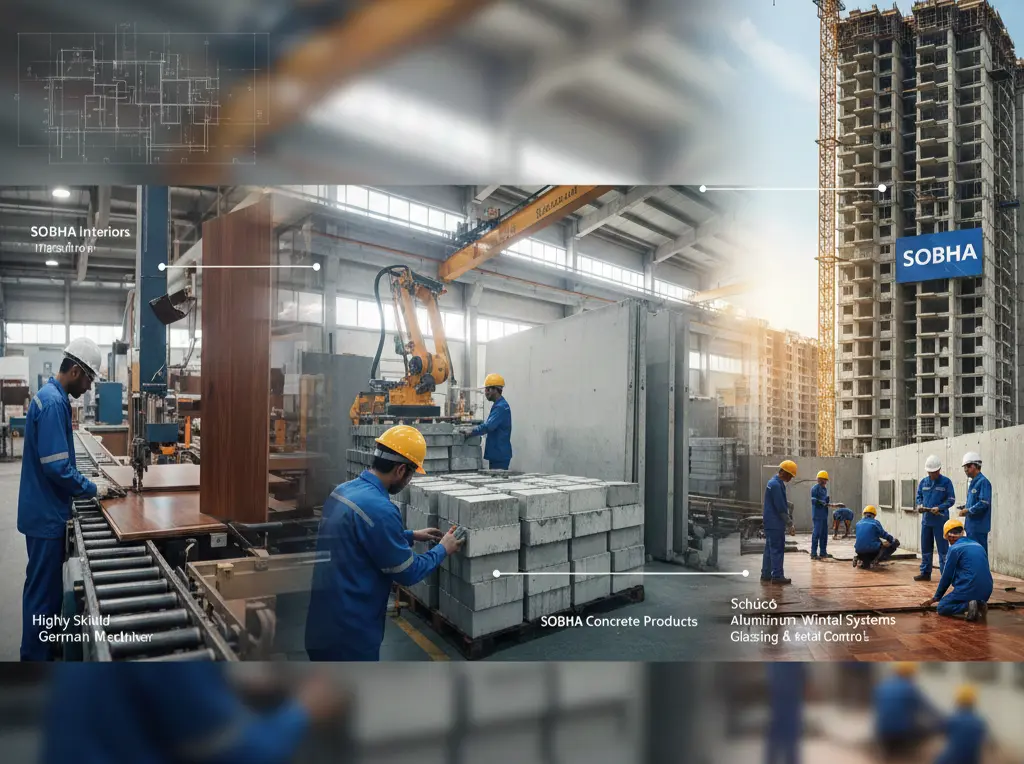
In a real estate market often plagued by delays and inconsistent quality, SOBHA Limited stands as a solitary beacon of reliability. The secret? An industry-first Backward Integration Model. Featured in a Harvard Business School case study, this model ensures that from the first architectural sketch to the final polish on a wooden floor, every aspect is handled in-house.

The Five Pillars of SOBHA's Integrated Ecosystem

1. In-House Design & Architecture

With a team of 400+ in-house architects and designers, SOBHA doesn’t just build homes; they engineer lifestyles. This allows for total control over space optimization and structural integrity.

2. Advanced Manufacturing Units

SOBHA is the only developer in India with its own manufacturing facilities spread over 25 acres in Bangalore:

  • SOBHA Interiors: Produces world-class woodwork and modular furniture.

  • Concrete Products Division: Manufactures high-strength concrete blocks, pavers, and precast components.

  • Glazing & Metal Works: Creates premium aluminum window systems and metal facades.

3. Self-Reliant Construction

By employing a dedicated workforce of over 30,000 skilled professionals instead of outsourcing to third-party contractors, SOBHA ensures that every floor meets the same “Gold Standard.”

4. Stringent Quality Audits (The 1456 Checks)

Every SOBHA project undergoes 1,456 rigorous quality checks before handover. Because SOBHA owns the supply chain, their internal auditors have the power to reject any component that doesn’t meet international benchmarks.

5. Technology & Precast Innovation

Through Precast Technology, SOBHA has reduced construction timelines by nearly 30% while improving precision and structural durability—a feat that few global developers can match.

Feature Conventional Developers SOBHA Limited
Material Sourcing
Market Procurement (Variable)
In-house Manufacturing (Fixed)
Workforce
Outsourced Contractors
Directly Employed Skilled Artisans
Quality Control
Visual Sampling
1,456-Point Technical Audit
Sustainability
Waste Heavy
Recycle & Reuse Integrated Model
Delivery
Dependent on Vendors
Self-Reliant Timeline Control

Frequently Asked Questions: The Sobha Backward Integration Model

Backward integration is a business strategy where a developer takes direct control of its supply chain. Instead of hiring external contractors or buying materials from third-party vendors, the developer owns the manufacturing units (for concrete, wood, metal, etc.) and manages the entire construction process in-house.

The primary benefits are Quality and Certainty. Because the developer doesn't rely on outside vendors, they can guarantee that every material used—from the tiles to the windows—meets a specific quality standard. It also significantly reduces the risk of project delays caused by external supplier issues.

Yes. SOBHA is India’s only backward-integrated real estate company. They operate their own factories for:

Interiors & Woodwork: One of the largest such factories in India.

Concrete Products: Manufacturing high-strength blocks and pavers.

Glazing & Metal Works: Producing specialized aluminum window systems and metal finishes.

Backward integration is extremely capital-intensive and requires massive investment in land, factories, machinery, and a specialized workforce. Most developers find it easier and cheaper to outsource these tasks, but they lose control over the final quality in the process.


While the initial cost of building an integrated ecosystem is high, it allows the developer to eliminate "middleman" markups. For the buyer, this means you receive a superior product (higher quality finishes and structural strength) at a competitive market price, which often leads to better resale value.

By owning the manufacturing units and employing a dedicated workforce of over 30,000 skilled professionals, SOBHA eliminates the "bottlenecks" that cause delays in traditional construction, such as labor strikes at a third-party contractor or material shortages from a vendor.

Yes. By controlling the manufacturing process, SOBHA can implement "Green" practices more effectively. For example, waste from one factory can be recycled and reused in another part of the construction cycle, significantly reducing the overall environmental footprint of the project.

Leave a Comment

Stay Connected with Us

More Related Blogs & Posts

Enter Your Details to Request Complete Information

Exclusive Offers | Download Brochure | Schedule Site Visit